Home › Guides › Chester Flat Roof Guide: GRP vs EPDM vs Felt
Chester Roofing Guide
Chester Flat Roof Guide: GRP vs EPDM vs Felt
Chester's northwest climate is demanding on flat roofs. This guide compares the three main flat roof systems on Chester garages, extensions and bay windows and explains which is right for each application.
Traditional Felt Flat Roofing in Chester
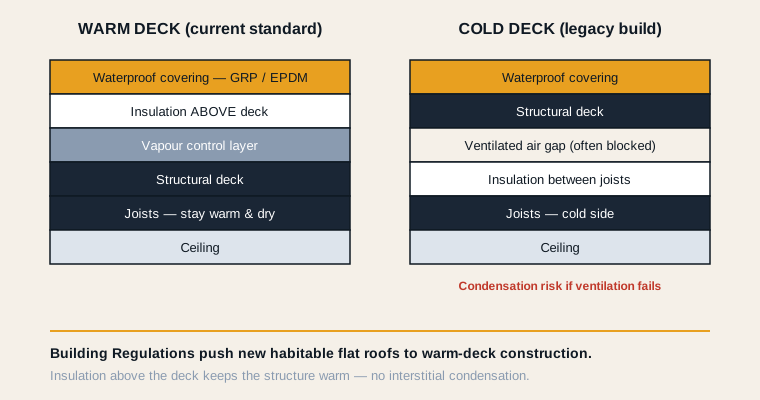
Warm deck vs cold deck: insulation above the deck prevents the condensation that rots cold-deck flat roofs.
Built-up felt flat roofing has a design life of 10 to 15 years in Chester conditions. In higher-humidity locations such as Handbridge near the Dee or Saltney on the flood plain, felt systems are at the lower end of this range. Once a felt flat roof develops its first leak it typically develops more within 12 months. Patching individual leaks in ageing felt is a short-term fix — the membrane itself has degraded throughout.
GRP Fibreglass Flat Roofing in Chester
GRP fibreglass is the standard modern flat roof system for Chester garages, extensions and bay windows. It is installed as a seamless laminate with no joints — eliminating the primary failure mechanism of felt. GRP handles Chester's frost and rainfall cycles without brittleness and has a real-world lifespan of 25 to 40 years. A GRP flat roof costs approximately 20 to 40% more than felt upfront. Over a 25 to 40 year lifespan versus three to five felt patch cycles, GRP is substantially more economical in total cost of ownership.
EPDM Rubber Flat Roofing in Chester
EPDM rubber single-ply membrane has an expected lifespan of 30-plus years in Chester conditions. EPDM handles Chester's temperature range without degradation, and its flexibility accommodates building movement without cracking. It is the preferred system for larger flat roof areas above approximately 40 square metres where GRP panels would require bonded joints.
Which Flat Roof System Is Right for Your Chester Property?
GRP is the right choice for single garages, bay window flat roofs and extensions up to approximately 40 square metres. EPDM is preferable on larger areas above 40 square metres. Traditional felt is acceptable only as a budget option where the 10 to 15 year replacement cycle is understood and accepted. We do not install torch-on felt on domestic Chester properties.
No call-out fee · 24/7 emergency · 10-year guarantee
The systems
GRP, EPDM and Felt Compared for Chester Roofs
Flat roofs are common across Chester on garages, extensions, dormers and bay tops, and the covering system you choose determines how long it lasts and how much trouble it gives you. Three systems dominate, and they are not equal.
GRP fibreglass
A seamless, rigid fibreglass laminate laid over a prepared deck and cured in place. It has no joints to fail, handles foot traffic well, and lasts 25–30 years or more. It is the premium choice, ideal for extension roofs and anywhere that needs to be walked on or is on view. It must be laid in dry conditions on a sound deck.
EPDM rubber
A single sheet of synthetic rubber, often installed in one piece with no seams on a domestic roof. It is flexible, copes well with building movement and temperature swings, and lasts 20–30 years. It is excellent value for garages and larger flat areas, and can be laid in a wider range of conditions than GRP.
Felt
Traditional built-up felt, the covering on most older Chester flat roofs. Modern torch-on felt is a real improvement on the old pour-and-roll systems, but felt remains the shortest-lived option, typically 10–15 years, and is where most flat-roof leaks originate. When an old felt roof fails, re-covering in GRP or EPDM rather than more felt is almost always the better long-term decision.
Choosing
Which Flat Roof System Suits Your Chester Property
The right choice depends on the roof’s use, size and your budget. For a small garage where cost matters most and foot traffic is minimal, EPDM offers the best value and a long life. For an extension roof that may be walked on, is visible from upstairs windows, or that you want to forget about for thirty years, GRP fibreglass justifies its higher price. Felt only really makes sense as a short-term patch; for any roof you intend to keep, one of the modern systems is the sounder investment.
Chester’s wet climate is hard on flat roofs — standing water, driving rain and freeze-thaw all find weak seams — which makes the seamless systems particularly worthwhile here. Whatever the covering, the deck beneath and the drainage matter as much as the membrane: a correctly falling, well-drained, properly insulated flat roof in a quality system will outlast a cheap covering over a tired deck several times over. A survey establishes the state of your existing deck and the best system for the specific roof.
Warm and cold
Warm Deck vs Cold Deck: Getting the Build-Up Right
One technical point matters more than any other for a flat roof’s long-term performance in Chester’s damp climate, and it is invisible once the roof is finished: whether it is built as a warm deck or a cold deck, and whether it is properly ventilated. Get this wrong and even the best covering will suffer condensation, rot the deck from beneath, and fail early — a problem that looks like a leak but is actually trapped moisture.
A warm-deck flat roof places the insulation above the deck, keeping the structure warm and largely eliminating the condensation risk; it is the modern best-practice approach for most extensions and re-covers. A cold-deck design, with insulation between the joists below the deck, must be ventilated correctly or moist internal air condenses on the cold underside of the deck. Chester’s humidity makes this a real and common cause of premature flat-roof failure. When we quote a flat roof, the deck build-up and ventilation are part of the specification, not an afterthought — because a correctly-built warm deck in a quality covering is what turns a 15-year roof into a 30-year one.
FAQ
Frequently Asked Questions
Traditional felt: 10 to 15 years. GRP fibreglass: 25 to 40 years. EPDM rubber: 30-plus years.
Yes — GRP costs 20 to 40% more upfront but is significantly cheaper in total cost of ownership over 25 to 40 years compared to repeated felt replacement cycles.
GRP fibreglass. Seamless, no joints, 25 to 40 year lifespan, handles Chester's northwest climate without degradation.
A single garage GRP flat roof costs £950 to £1,900. A rear extension up to 30 square metres costs £2,000 to £5,500. Free quotes across all Chester postcodes.
A synthetic rubber single-ply membrane with a 30-plus year lifespan. Preferred for larger flat roof areas above approximately 40 square metres.
Like-for-like replacement is generally permitted development. Changing the roof form may require consent. We advise at the survey stage.
Blistering felt surface, visible cracks, pooling water after 48 hours, active leaks through the ceiling, or felt delaminated from the decking.
Get In Touch
Get Your Free Roofing Quote
No call-out fees. No obligation. Honest quote from a local Chester roofer.